I walked into the family brunch with my kids. My father looked at me with contempt and said, “The day was going so well… until now.” My son squeezed my hand and whispered, “Don’t they want us here?” That night, I closed a door I never opened again.
“If the bitter one showed up with her kids, Sunday is ruined.”
My dad said it without raising his voice, like he was asking for another cup of coffee instead of stabbing me in front of half the family. The brunch was at a nice restaurant in Charleston, one of those places with artisan pastries, long tables, and people who smile just for the photo. My mom had sent the message to the group three days earlier: “Sunday, 11 a.m. Everyone come.” Everyone. I thought my kids were included in that word.
Toby squeezed my hand as soon as he heard the comment. He was seven and still did that when a place felt too overwhelming. Maisie, younger and more timid, hid behind my sweater without fully understanding what was happening, but sensing something was wrong. Kids always know before we do.
The worst part wasn’t my father Arthur’s cruelty. It was everyone else’s silence.
My brother Scott kept pouring himself orange juice as if he hadn’t heard anything. His wife, Kimberly, adjusted her purse and looked down. My mom, Martha, pretended to focus on her napkin. My aunts stayed stiff, with that cowardly expression of people who prefer to swallow discomfort rather than face the truth.
No one said, “Don’t talk to her like that.”
No one said, “The kids are here.”
No one said, “That’s enough, Arthur.”
No one.
Then Toby looked up at me and asked softly:
—Mom… don’t they want us here?
Something inside me broke, but it didn’t make a sound. It was like an old crack, one that had been spreading inside me for years, finally split open. Because it wasn’t just that morning. It wasn’t just that sentence. It was my whole life sitting at that table again.
My father telling me since I was a teenager that I ruined the atmosphere for being “too sensitive.”
My mother asking me not to respond, not to make a scene, to understand everyone else’s character.
My brother always being the charming one, untouchable, the one everything was forgiven to.
And me… the useful daughter. The one who helped. The one who lent money. The one who handled moves, parties, emergencies, bills, favors, other people’s silence and apologies.
The divorced one.
The inconvenient one.
The one who had to smile even when she was hurt.
But one thing was them doing it to me. Something very different was watching my children start to learn the same poisonous lesson: that love has to be begged for, that you have to endure humiliation to belong.
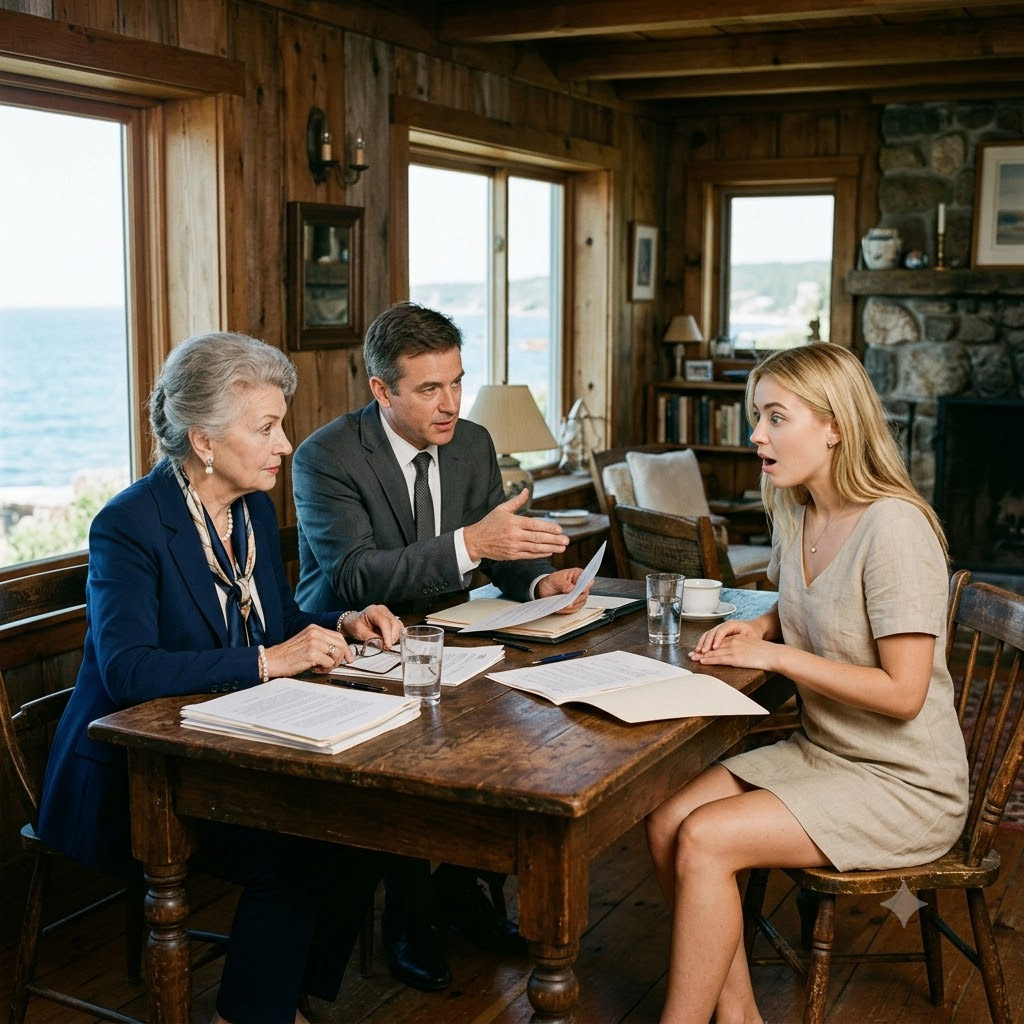
I leaned down, kissed Toby on the forehead, and said as firmly as I could:
—We’re leaving.
I didn’t make a scene. I didn’t shout. I didn’t cry. I didn’t wait for explanations from people who had spent years perfecting cowardice. I just looked once at my mom and said:
—Thanks for making it so clear in front of them. You saved me a lot of explanations.
I took Maisie’s hand and the three of us walked out of the restaurant. No one ran after us. No one asked us to stay. Not even a “wait.” That confirmed everything.
Outside, the sun was shining as if the world hadn’t just split in two. I put the kids in the car. Maisie asked if they had done something wrong. I told her no. Toby asked if his grandfather was mad at him. I told him no, even though inside I was burning with anger.
That afternoon I bought them ice cream, took them to the park, put on a movie, and pretended everything was normal, the way mothers do when their hearts are falling apart. But when they finally fell asleep and the house went quiet, I sat alone in the kitchen, opened the family group chat, and knew that night was going to change everything.
I couldn’t imagine that the real storm hadn’t even started yet… and that what was coming next would be much worse.
That night, I didn’t type in the family group chat right away.
I sat at the kitchen table with my phone glowing in my hand, listening to the soft hum of the refrigerator and the distant sound of Toby turning in his sleep. My thumb hovered over the screen while every old excuse my mother had ever given rang in my head.
Your father is just tired.
Your brother didn’t mean it.
Don’t make things uncomfortable.
But my children had been uncomfortable all morning because grown adults were too cowardly to be kind.
Finally, I wrote one sentence.
“After today, the kids and I will no longer attend family gatherings.”
For three minutes, nothing happened.
Then my mother replied first.
“Claire, don’t be dramatic.”
Scott followed with a laughing emoji. “Seriously? Over one comment?”
Kimberly wrote, “This is why people walk on eggshells around you.”
I stared at the messages, strangely calm.
Then my father sent his.
“Good. Maybe brunches will be peaceful again.”
That was the door closing.
Not quietly. Not gently.
But permanently.
I took screenshots of everything. Not because I planned revenge, but because I knew how this family worked. By morning, the story would become that I had exploded, embarrassed everyone, weaponized my children, ruined a nice meal.
So before they could rewrite it, I sent the screenshots to the one person they always respected more than me.
My grandmother Evelyn.
She was eighty-one, sharp as broken glass, and the actual owner of the beach house everyone fought over every summer. She called me seven minutes later.
Her voice was soft. “Did Arthur say that in front of the children?”
“Yes.”
“And Martha allowed it?”
“Yes.”
There was a silence so cold I could almost feel it through the phone.
“Then listen carefully,” Grandma said. “Tomorrow morning, do not answer any calls from them. Not one.”
My stomach tightened. “Why?”
“Because for twenty years, I have watched them treat you like a servant and call it family. Today, they did it to my great-grandchildren.”
The next morning, my phone exploded exactly as she predicted.
First my mother. Then Scott. Then Kimberly.
Then my father.
But the message that made my hands shake came from Grandma’s attorney.
The subject line read: Immediate Revision of Estate Distribution.
And beneath it, one sentence changed everything.
“Mrs. Evelyn Whitaker has removed Arthur, Martha, and Scott from all future inheritance discussions.”
I read the line three times before my brain accepted it.
The kitchen seemed to tilt around me. Sunlight poured through the blinds in clean golden stripes, landing across the cereal bowls I had not washed yet. Toby was at the counter, swinging his legs, eating toast with too much jam. Emma sat beside him with her hair still tangled from sleep, watching cartoons on mute because she knew my phone had been ringing all morning.
“Mom?” Toby asked. “Are you okay?”
I locked the screen too quickly.
“Yes, baby. I’m okay.”
But my voice sounded like someone else’s.
For years, the beach house had been the altar everyone worshiped. A pale blue house on Sullivan’s Island with white shutters, an old wraparound porch, and a private path that cut through sea oats down to the water. My grandfather built it before I was born. Grandma Evelyn kept it after he died. Every summer, the family pretended to be close there.
They took photos in linen clothes.
They drank iced tea on the porch.
They told stories about tradition.
And every year, I cooked, cleaned, packed lunches, watched everyone’s children, and slept in the smallest guest room because Scott and Kimberly “needed space.”
My father always spoke of that house like it was already his.
My mother planned renovations she had no right to make.
Scott once told his friends, while I stood right there holding a tray of sandwiches, “When Grandma finally hands it over, we’re turning it into a real family retreat.”
A real family retreat.
As if I had never belonged.
My phone buzzed again.
MOM.
I let it ring.
Then another.
SCOTT.
Then Dad.
Then Kimberly.
Grandma had told me not to answer. So I didn’t.
By noon, the texts started changing tone.
Mom: “Claire, call me immediately. Your grandmother is confused.”
Scott: “Whatever you told Grandma, fix it.”
Kimberly: “This is disgusting. You used your kids to manipulate an old woman?”
Dad: “You have gone too far.”
I stared at that last message for a long time.
I had gone too far?
Not the man who humiliated his daughter in front of her children.
Not the woman who sat silent while it happened.
Not the brother who laughed.
Me.
Because I finally stopped swallowing the knife.
I placed the phone facedown and went to pack the kids’ lunchboxes for Monday.
That was how I survived my family. I did ordinary things while they set fires and called the smoke my fault.
At two-thirty, my doorbell rang.
I froze.
Toby looked up from his puzzle on the living room rug. Emma’s eyes widened.
“Stay here,” I said softly.
I checked the peephole.
My mother stood on the porch in a cream cardigan and pearl earrings, gripping her handbag with both hands. Beside her was my father, jaw tight, eyes cold. Scott leaned against his car behind them, arms crossed, wearing the annoyed expression of a man forced to clean up someone else’s mess.
Kimberly sat in the passenger seat, scrolling on her phone like this was beneath her.
I did not open the door.
My mother knocked again.
“Claire. We know you’re home.”
I kept the chain on and opened the door only two inches.
My father’s eyes dropped immediately to the chain.
His mouth twisted. “Really?”
“Yes,” I said.
My mother leaned closer, lowering her voice into the soft tone she used when she wanted obedience disguised as concern. “Honey, we need to talk.”
“No, you need me to fix something.”
Her expression flickered.
Scott barked from behind her, “You ran to Grandma like a child.”
I looked past my parents at him. “I sent her what you wrote.”
“You knew what she’d do.”
“No,” I said. “I knew what you did.”
My father stepped forward. “Open the door.”
The old Claire would have done it.
The old Claire would have seen that look and felt twelve years old again, standing in the hallway while he told me I cried too much, asked too much, ruined too much.
But behind me, Toby whispered, “Mom?”
And the old Claire disappeared.
“No,” I said.
My father blinked.
It was such a small word. One syllable. Nothing dramatic.
But it stunned him more than shouting would have.
My mother pressed one hand to her chest. “Claire, please. Your grandmother is making decisions based on emotion. You know how she gets.”
I almost laughed.
Grandma Evelyn was the least emotional person I knew. She once fired her own accountant during Thanksgiving dinner because he misreported a trust distribution by eight dollars.
“She sounded clear to me,” I said.
Scott strode up the walkway. “Do you have any idea what you’ve done? Dad’s been managing that property for years.”
“No, Dad’s been using it for free.”
His face flushed.
My mother gasped as though I had cursed in church.
“You ungrateful girl,” Dad said quietly.
There it was.
The real voice.
The one he kept polished in public but sharpened at home.
“You have always been jealous of your brother,” he continued. “Always bitter. Always waiting for a chance to punish this family because your life didn’t turn out the way you imagined.”
Something inside my chest tightened, but it did not break.
“My life turned out fine,” I said. “What didn’t turn out was my willingness to keep pretending you love me the same.”
Silence fell on the porch.
Even Scott stopped moving.
My mother’s face crumpled, but not with guilt. With panic. She had always hated when ugly truths were spoken plainly. She preferred damage covered in lace.
“How can you say that?” she whispered.
“Because yesterday my son asked if you wanted us there.”
Her eyes flicked away.
That was enough.
Not an apology. Not regret.
Just avoidance.
I started to close the door.
My father shoved his palm against it.
The chain snapped taut.
“Don’t you dare shut me out.”
Toby cried out behind me.
In that instant, every last thread of hesitation burned away.
I looked my father in the eyes and said, “Take your hand off my door, or I’ll call the police.”
His hand dropped.
Not because he respected me.
Because neighbors were watching.
Across the street, Mrs. Halpern had paused with her gardening gloves on. Two houses down, a man washing his truck had gone still. My father noticed them all at once, and his face changed into the public version of itself.
“Claire,” he said, softer now. “Don’t make a scene.”
I smiled sadly.
“You already did.”
Then I closed the door.
For a full minute, nobody inside my house moved.
Then Emma ran into my arms.
“She looked scared,” my daughter whispered.
“Who?”
“Grandma Martha.”
I held her tightly, breathing in the strawberry scent of her shampoo.
“She’s scared because she can’t control what happens next.”
Toby stood near the couch, trying very hard not to cry. He was nine, old enough to understand cruelty, too young to know what to do with it.
“Did Grandpa mean it?” he asked.
My throat closed.
I crouched in front of him. “What he said yesterday was cruel. And no child should ever hear that from family.”
“But did he mean it?”
I wanted to lie.
I wanted to wrap him in something softer than truth.
But I had been raised inside lies dressed as protection, and I knew how heavy they became.
“I think Grandpa says hurtful things when he wants power,” I said carefully. “But what he says does not decide your worth. Ever.”
Toby nodded, but tears spilled anyway.
That night, after I tucked them in, I sat alone in the living room and listened to the voicemail my father had left.
His voice was controlled, dangerous.
“You need to understand something, Claire. Your grandmother is old. People will question whether she was pressured. I suggest you think carefully before you let this go any further.”
I saved the voicemail.
Then I sent it to Grandma Evelyn.
She replied with two words.
“Excellent. More.”
The next morning, a black town car pulled up outside my house at exactly nine.
Grandma stepped out wearing a navy suit, dark sunglasses, and lipstick the color of red wine. Her silver hair was pinned perfectly at the nape of her neck. Her attorney, Mr. Harlan, followed with a leather briefcase.
I opened the door before she rang.
Grandma removed her sunglasses and studied my face.
“You look tired.”
“I am.”
“Good. That means you are not numb.”
Then she stepped inside and held out both arms.
I went to her.
For a moment, I was not thirty-six. I was six again, standing in her kitchen after my father forgot to pick me up from school, letting her smell like lavender and black tea and safety.
“I’m sorry,” she said into my hair.
Those two words nearly undid me.
Because they were the words my own parents had never learned.
Mr. Harlan sat at my kitchen table and laid out documents while Grandma inspected my home like a general assessing a battlefield. She paused at the children’s drawings on the refrigerator, touched one with her fingertip, and smiled.
“Toby has your grandfather’s eye for boats,” she said.
“It’s a dragon,” I said.
“Even better.”
Despite everything, I laughed.
Then Mr. Harlan cleared his throat.
“Mrs. Miller,” he said, using my married name though my ex-husband had been gone for four years, “your grandmother has asked me to explain the current restructuring.”
I glanced at Grandma. “You don’t have to do this.”
“Yes,” she said. “I do.”
Mr. Harlan opened the first folder.
The estate was larger than I had known. Much larger. There were investment accounts, two rental properties, the beach house, a family trust, and a charitable foundation my grandfather had created quietly decades earlier.
Grandma listened without expression while he explained that Arthur, Martha, and Scott had been removed from discretionary benefits. Kimberly had never been included directly, but any indirect access through Scott was now blocked. Future use of the beach house was suspended pending legal review. The summer calendar had been canceled.
I stared at him.
“Canceled?” I repeated.
Grandma’s mouth curved. “Every last linen-wearing parasite.”
Mr. Harlan coughed into his fist.
But then he slid one final document across the table.
“This is the part Mrs. Whitaker wanted you to see first.”
My name was printed halfway down the page.
Claire Elise Miller.
Trustee Designate.
I looked up slowly. “What is this?”
Grandma sat across from me. “A correction.”
“No.”
“Yes.”
“Grandma, no. I didn’t send you those screenshots because I wanted anything.”
“I know.”
“I don’t want them thinking—”
“They already think the worst of you,” she interrupted. “Stop living your life around people determined to misunderstand it.”
The words landed hard.
Mr. Harlan explained that I was being named successor trustee over the family trust and managing authority over the beach house after Grandma’s death, with limited authority beginning immediately. The children would receive protected educational funds. The house itself would eventually pass not to my father, not to Scott, but into a trust controlled by me until Toby and Emma were adults.
My hands went cold.
“This will destroy them,” I whispered.
Grandma’s eyes sharpened. “No. Their behavior did that. This merely removes the curtains.”
I looked down at the documents, at the neat black letters that rearranged the entire architecture of our family.
For years, I had believed power belonged to whoever shouted loudest.
Now it sat quietly on my kitchen table, smelling faintly of printer ink.
By late afternoon, the news had spread.
Not because I told anyone.
Because Grandma did.
She sent one email to the family, copied to her attorney, my parents, Scott, Kimberly, two cousins, and Aunt Patricia in Savannah, who possessed the communication speed of a national emergency alert.
The message was short.
“After recent events, I have revised estate plans and revoked all informal privileges regarding the Sullivan’s Island property. No member of this family is to contact Claire regarding this matter. Anyone who attempts to pressure her will be removed from all remaining consideration.”
Then she signed it:
Evelyn Whitaker.
No love.
No warm regards.
Just the name that paid for every vacation they had mistaken for entitlement.
Within ten minutes, Scott ignored the instruction.
His text came first.
“You conniving snake.”
Then:
“You’ve been waiting for this.”
Then:
“You think you can run the beach house? You can barely run your own life.”
I blocked him.
Kimberly messaged from a new number.
“Hope you enjoy stealing from your own family. Classy.”
I blocked her too.
My mother sent only one message.
“Please don’t let your grandmother do this to your father.”
I stared at it for a long time.
Not please forgive us.
Not I’m sorry the kids were hurt.
Please protect the man who hurt you from consequences.
I deleted it.
That Friday, Grandma asked me to meet her at the beach house.
I almost refused. The thought of walking through that place, with all its sunlit rooms and hidden humiliations, made my chest ache.
But Grandma said, “There is something there you need to see.”
So I drove out after dropping the children at school.
The sky was bright and mercilessly blue. Salt air blew through my open window as I crossed the bridge. For a few minutes, I remembered summers before everything became complicated—before I understood why Scott always got the bigger bedroom, why my mother scolded me for eating the last peach but laughed when he took the last three, why my father called me difficult whenever I asked for fairness.
The beach house looked exactly the same.
Pale blue siding.
White porch rails.
Hanging baskets.
Beautiful enough to make cruelty seem impossible.
Grandma waited on the steps with Mr. Harlan beside her.
Inside, white sheets covered some of the furniture. The rooms smelled of lemon polish and ocean damp. My footsteps echoed through the hallway.
“Your father came here last night,” Grandma said.
I stopped.
“What?”
“He still has a key. Or had one.”
Mr. Harlan’s expression was grim. “The locks are being changed today.”
Grandma led me into the study.
My grandfather’s study had always been forbidden to children. Dark wood shelves, brass lamp, old maps framed on the walls. I had loved it from the doorway.
Now the desk drawers stood open.
Papers were scattered across the rug.
A framed photograph of my grandparents lay facedown, glass cracked.
My stomach turned.
“Dad did this?”
“He was looking for documents,” Mr. Harlan said. “Specifically anything that might help him challenge Mrs. Whitaker’s competency.”
I gripped the back of a chair.
Grandma’s face was calm, but her hand trembled once before she folded it into a fist.
“He has always believed grief made me weak,” she said. “He forgets grief taught me patience.”
Mr. Harlan lifted a small device from the bookshelf.
A camera.
My pulse jumped.
“You recorded him?”
Grandma smiled faintly. “Your grandfather installed security after a hurricane season theft in 1998. Arthur never paid attention to anything that didn’t immediately benefit him.”
Mr. Harlan opened his tablet.
The footage was silent, but clear.
My father entered the study just after midnight, moving with frantic purpose. He yanked open drawers, flipped through folders, cursed at papers. My mother appeared in the doorway, wringing her hands. Scott came behind her with a flashlight.
Then my father found the locked lower cabinet.
He kicked it twice.
My mother covered her mouth.
Scott looked toward the door, nervous.
My father kicked it again until the wood splintered.
Grandma watched without blinking.
Inside the cabinet had been old letters, tax records, property documents, and one sealed envelope labeled with my name.
Claire.
On the video, my father picked it up.
He froze.
Then he slipped it inside his jacket.
My breath stopped.
“What was in that envelope?” I asked.
Grandma’s expression changed.
For the first time since this began, she looked not angry, not controlled, but deeply sad.
“That,” she said, “is why I asked you here.”
Mr. Harlan reached into his briefcase and withdrew another envelope.
Also labeled Claire.
Same handwriting.
“This is a copy,” Grandma said. “Your grandfather made two.”
I did not move.
The room seemed to narrow around the envelope. My name sat there in blue ink, written by a man who had died when I was twelve, a man I remembered mostly in fragments: the scent of pipe tobacco, warm hands lifting me onto a dock, his voice calling me “little bird.”
“What is it?” I whispered.
Grandma nodded to Mr. Harlan.
He left the room and closed the door behind him.
Grandma held the envelope out to me.
I took it with shaking fingers.
Inside was a letter.
The paper was yellowed at the edges.
My grandfather’s handwriting slanted firmly across the page.
My dearest Claire,
If you are reading this, it means the adults around you have failed to tell the truth.
I sat down hard in the chair.
Grandma stood by the window, looking toward the ocean.
The letter continued.
You were never difficult. You were never too sensitive. You were a child who noticed when love was being measured unfairly.
My eyes blurred.
I forced myself to keep reading.
Your father resented you long before you could have done anything to deserve it. Not because of who you are, but because of what you represented. Evelyn and I tried to protect you where we could, but I fear we did not do enough.
I stopped breathing.
The next line waited like a blade.
Arthur is not your biological father.
The room disappeared.
The walls, the shelves, the ocean light, Grandma standing stiffly by the window—all of it blurred into a roaring silence.
I read the sentence again.
Arthur is not your biological father.
My hands shook so hard the paper rattled.
Grandma turned slowly.
“I wanted to tell you years ago,” she said. “Your mother begged me not to.”
I looked at her, unable to speak.
“My son married Martha knowing she was pregnant,” Grandma said. “He said he loved her enough to raise you. For a little while, I believe he meant it.”
The air felt too thin.
I pressed one hand to my chest.
“But after Scott was born,” Grandma continued, “Arthur changed. He began treating you like a reminder of a bargain he regretted making. Your grandfather confronted him many times. So did I.”
“Who knew?” My voice barely sounded human.
Grandma closed her eyes.
“Your mother. Arthur. Your grandfather and me. And eventually Scott.”
The name struck me.
“Scott knew?”
“He found old documents when he was seventeen. Arthur told him enough.”
I thought of every smirk, every joke, every time my brother called me dramatic, every time he said, “You’re lucky Dad puts up with you.”
He had known.
He had known I was standing on a floor that could vanish beneath me.
And he had enjoyed watching me balance.
I looked back at the letter.
Your blood does not determine your worth, little bird. But secrets shape families into prisons. If this truth has reached you late, I am sorry. You deserved honesty from the beginning.
At the bottom, my grandfather had signed his name.
Thomas Whitaker.
I folded over the page carefully because if I didn’t, I would crush it in my fist.
“Who was he?” I asked.
Grandma’s voice softened. “Your biological father?”
I nodded.
She hesitated.
And that hesitation scared me more than the answer.
“His name was Daniel Hayes,” she said. “He was a journalist. He worked with your mother before she met Arthur.”
“Did he know about me?”
Grandma’s mouth trembled.
“Yes.”
I stood too fast. The chair scraped the floor.
“He knew?”
“He wanted you.”
The words hit harder than anything my father had ever said.
For thirty-six years, I had believed I was unwanted because something in me was defective.
Now Grandma was telling me there had been someone who wanted me, and he had been erased.
“What happened?” I whispered.
Grandma looked suddenly older.
“Martha chose Arthur. Arthur had money, stability, the family name. Daniel had principles and a temper. He fought. He wrote letters. He came to the hospital.”
My knees weakened.
“Did he see me?”
“Yes,” Grandma said. “Once. Your mother allowed it when Arthur was out of town. Daniel held you for nearly an hour.”
A sound escaped me.
Not a sob exactly.
Something smaller and worse.
“Then Arthur found out,” she continued. “There was a legal threat. Money changed hands. Daniel left Charleston six months later.”
“He abandoned me.”
“No,” Grandma said firmly. “He was pushed out.”
I turned toward the window, unable to look at her.
Beyond the glass, the ocean moved bright and indifferent.
All those years, I had begged for crumbs from a man who hated the role he had chosen.
All those years, my mother had watched me starve for affection while knowing there had once been someone willing to love me.
“Is he alive?” I asked.
Grandma did not answer right away.
I turned around.
“Grandma.”
She walked to the desk and picked up a small card.
“I hired someone years ago,” she said. “Not to interfere. Just to know.”
She handed me the card.
Daniel Hayes.
Portland, Maine.
Editor-in-Chief, North Coast Review.
There was a phone number.
An email address.
My fingers closed around it.
The room tilted again, but this time I did not fall.
That evening, I picked up Toby and Emma from school, made spaghetti, helped with homework, and pretended I had not learned my entire childhood had been built on a locked room full of lies.
At eight-thirty, after the kids were asleep, I sat at the kitchen table.
The same place where I had sent the message that started everything.
My phone lay in front of me.
Daniel Hayes.
I typed his name into a search bar.
Images appeared.
Gray hair.
Kind eyes.
A weathered face.
A man standing beside shelves of books, accepting a regional journalism award.
I stared at him for so long the screen dimmed.
My phone buzzed.
Unknown number.
I almost ignored it.
Then a text appeared.
“Claire. This is your mother. Please call me before you speak to Evelyn again. There are things you don’t understand.”
I laughed once.
It sounded nothing like joy.
Another message came.
“Your father is devastated.”
Your father.
Even now.
Even with the lie cracking open beneath us.
A third message followed.
“Whatever your grandmother told you, she is twisting the past.”
I typed back before I could stop myself.
“Did Daniel Hayes want me?”
Three dots appeared.
Vanished.
Appeared again.
Then my mother replied.
“Family is more complicated than biology.”
That was the confession.
Not full.
Not clean.
But enough.
I saved the screenshot.
Then I dialed the number on the card.
It rang four times.
A man answered, voice low and cautious.
“Daniel Hayes.”
For a second, I could not speak.
He waited.
I heard paper rustle on his end. A clock ticking faintly. Rain maybe.
Finally, I said, “My name is Claire.”
Silence.
Not empty silence.
Recognition.
A breath caught halfway between pain and disbelief.
Then his voice changed completely.
“Claire Elise?”
My hand flew to my mouth.
He knew my middle name.
He whispered it like a prayer he had been afraid to say aloud.
“Yes,” I said, and my voice broke. “I think we need to talk.”
On the other end of the line, the man I had been told never existed began to cry.
And outside my kitchen window, headlights swept across my driveway.
A car rolled to a stop in front of my house.
My father stepped out first.
Then my mother.
Then Scott.
But they were not alone.
A police cruiser pulled in behind them.
And Daniel Hayes, still breathing shakily through the phone, said one sentence that turned my blood cold.
“Claire, listen to me carefully. If Arthur is there, do not open the door. He threatened me once. I don’t think he came there to apologize.”
PART 3 — The Morning Grandma Burned the Throne
For almost a full minute, I simply stared at the email, unable to breathe.
The words looked too formal to be real, too clean for the chaos they had detonated.
Immediate Revision of Estate Distribution.
My hands trembled around the phone. Not because I wanted money. Not because some hidden greedy part of me had been waiting for Grandma Evelyn to punish them.
I shook because, for the first time in my life, someone powerful in our family had believed me without asking me to soften the truth first.
Toby came into the kitchen in dinosaur pajamas, rubbing one eye. “Mom?”
I locked the screen quickly. “Hey, sweetheart.”
“Are we going to Nana’s again?”
The question sliced through me.
I knelt in front of him and brushed the messy hair from his forehead. “No. Not for a while.”
His little shoulders dropped with relief so visible it nearly broke me.
From upstairs, Ellie called, “Good!”
Toby looked guilty, like he’d said something wrong without speaking.
I pulled him close. “You never have to go where people make you feel unwanted.”
My phone rang again.
Mom.
I didn’t answer.
Then Scott.
Then Kimberly.
Then Dad.
By eight-thirty, I had seventeen missed calls and a voicemail from my mother that began sweet and ended sharp.
“Claire, your grandmother is confused. You need to call her and fix this. Your father is furious. This is not how family behaves.”
I laughed once, but there was no humor in it.
Not how family behaves.
Apparently humiliation was tradition, but boundaries were betrayal.
At nine, Grandma’s attorney called. His name was Mr. Bellamy, a calm-voiced man who sounded like he had spent forty years delivering terrible news to people who deserved it.
“Ms. Whitaker,” he said, “your grandmother asked me to inform you that she would like you and your children to join her at the beach house this weekend. Privately.”
My stomach tightened. “Is she okay?”
“She is perfectly lucid, perfectly firm, and, if I may say so, rather energized.”
That sounded like Grandma.
“What does she want from me?”
“Nothing,” he said. “That is the point.”
I almost cried right there.
At 9:14, Dad finally stopped calling and sent a message.
“Call me now. You have gone too far.”
For once, I didn’t flinch.
I typed back one sentence.
“No, Dad. You did.”
Then I blocked him.
PART 4 — The Beach House Was Never Theirs
The beach house sat at the edge of Sullivan’s Island like an old queen refusing to kneel to storms.
White shutters. Wide porch. Salt-stained railings. A garden Grandma still insisted on tending herself, even though she had enough money to hire half the state.
When I pulled into the driveway Friday afternoon, Ellie gasped from the back seat.
“It looks like a movie house.”
Toby pressed his face against the window. “Do we have to be quiet here?”
I hated that question.
Grandma was already waiting on the porch in linen pants, a pale blue sweater, and sunglasses big enough to intimidate a judge.
She opened her arms.
Ellie ran first.
Toby followed a second later.
Grandma held them both with the fierce tenderness of someone who had just realized love had arrived wounded and late.
Then she looked at me.
“My girl.”
That was all she said.
And I broke.
She didn’t ask me to explain. She didn’t ask whether Dad had meant it. She didn’t tell me to consider his age, his pride, his childhood, his temper, or any of the thousand excuses my mother had used to turn cruelty into something I was supposed to understand.
She only pulled me into her arms and whispered, “I should have stopped them sooner.”
That evening, after the children fell asleep in the upstairs room with the seashell lamps, Grandma and I sat on the porch with tea going cold between us.
The ocean moved in the darkness like a breathing animal.
“Arthur called me thirty-six times,” she said.
I winced. “I’m sorry.”
“Don’t be. I enjoyed declining each one.”
Despite everything, I smiled.
Then her expression hardened.
“They think this house is already theirs.”
I looked at her. “Isn’t it supposed to go to Dad?”
“That was the old arrangement,” she said. “Before I understood exactly what kind of man my son had become.”
The wind moved through the porch screens.
Grandma turned her tea cup slowly. “For years, your father told me you were difficult. Your mother told me you were sensitive. Scott told me you liked being a victim. And I believed enough of it to stay quiet.”
My throat tightened.
“I saw pieces,” she continued. “Birthdays where they ignored you. Dinners where Kimberly corrected your children like servants. Christmas mornings where Scott’s family arrived empty-handed and left with gifts you bought.”
“I didn’t want to make you choose sides.”
Her eyes flashed.
“Claire, decent people do not make elders choose sides. Cruel people hide behind that to keep power.”
Then she reached beside her chair and lifted a folder.
It was thick.
Too thick.
“I had Bellamy prepare this months ago,” she said.
My pulse stumbled.
“Months?”
Grandma nodded. “I suspected things were worse than anyone admitted. So I had the family accounts reviewed.”
I frowned. “What accounts?”
“The maintenance account for this house. The medical trust your grandfather left. The education fund.”
My breath went cold.
“What are you saying?”
Grandma opened the folder and slid the first page toward me.
There, under official headers and neat columns, were withdrawals. Transfers. Invoices.
Names I recognized.
Scott.
Dad.
Mom.
Kimberly.
Grandma’s voice sharpened into steel.
“I am saying your family has not merely been cruel, Claire. They have been stealing from me.”
PART 5 — The Family Meeting That Became A Trial
Grandma invited them for Sunday lunch.
Not brunch. Lunch.
She said it mattered.
“Brunch is where cowards perform,” she told me. “Lunch is where people face consequences.”
I almost begged her not to do it. Not because they didn’t deserve it, but because old fear still lived in my bones. The fear of raised voices. Of being blamed. Of watching Mom cry just enough to make me feel guilty.
But Grandma had already decided.
At 12:03, Dad arrived in a navy blazer and fury.
Mom followed in pearls and panic.
Scott came last with Kimberly, both dressed like they were attending a negotiation they expected to win.
Nobody greeted me.
Dad’s eyes landed on the children, who were coloring at the far end of the sunroom under Grandma’s housekeeper’s watch.
“This is inappropriate,” he snapped. “You dragged children into adult business.”
I stood before I could stop myself.
“No. You dragged them into it when you humiliated them at brunch.”
Mom sighed. “Claire, please—”
Grandma lifted one hand.
Mom shut up instantly.
That alone almost healed something in me.
We sat around the dining table, the same table where I had once served lemonade to cousins who never said thank you. Sunlight poured through tall windows. The ocean glittered beyond the glass.
It should have been beautiful.
Instead, it felt like a courtroom.
Grandma sat at the head.
Mr. Bellamy sat beside her with a leather briefcase.
Dad scoffed. “Mother, this is ridiculous. You’re angry. We can talk privately.”
Grandma looked at him as if he were a stain on good fabric.
“We are talking privately. Everyone here helped create the problem.”
Scott leaned back. “If this is about the inheritance email, you can’t seriously be punishing us because Claire had another emotional episode.”
That word again.
Emotional.
As if pain was proof of weakness.
Grandma opened the folder.
“No, Scott. I am punishing you because you billed repairs to this estate that never happened. Because Kimberly invoiced event planning expenses to my household account. Because Arthur authorized transfers from the medical trust without my consent. Because Martha knew and chose silence.”
The room went still.
Kimberly’s face drained first.
Dad’s jaw locked.
Mom whispered, “Evelyn…”
Grandma’s voice was quiet, lethal.
“Do not use my name like a prayer after robbing me.”
Scott stood abruptly. “This is insane. Claire put you up to this.”
I laughed.
Everyone looked at me.
It wasn’t a bitter laugh. It was worse.
It was free.
“Scott, until Friday, I didn’t even know there were accounts.”
Kimberly pointed at me. “You’ve always wanted to turn everyone against us.”
“No,” I said. “I wanted a father who didn’t look disappointed when I entered a room. I wanted a mother who didn’t tell me to swallow every insult. I wanted my children to have grandparents who didn’t make them feel like spilled drinks on a white carpet.”
My voice broke, but I kept going.
“And yesterday, Toby asked if he had to be quiet in this house. He is six years old. Six. He already knows what it feels like to be unwanted.”
That landed.
Even Dad blinked.
But only for a second.
Then he sneered.
“You always were dramatic.”
Grandma closed the folder.
And smiled.
It was not a warm smile.
“Arthur, thank you.”
Dad frowned. “For what?”
“For proving I made the right decision.”
Mr. Bellamy removed a document from his briefcase.
Grandma signed it in blue ink.
Right there.
In front of all of them.
Then she looked at me.
“Claire, as of this afternoon, the beach house is being placed in an irrevocable trust for you, Ellie, and Toby.”
Mom gasped.
Scott shouted, “You can’t do that!”
Grandma looked at him calmly.
“I just did.”
PART 6 — When the Golden Son Fell
The explosion came exactly three seconds later.
Scott slammed both palms on the table. “That house belongs to the family!”
Grandma didn’t blink. “Then perhaps the family should have behaved like one.”
Kimberly’s voice went shrill. “Our children spend summers here!”
“So did Claire’s,” Grandma said. “Until you taught yours to treat them like guests in their own bloodline.”
Mom was crying now, but there was something hollow about it, something rehearsed.
“Evelyn, please. Arthur made mistakes, but this is too much.”
Grandma turned on her so quickly Mom recoiled.
“Martha, the tragedy of your life is not that you married a hard man. It is that you became his echo.”
Mom’s mouth parted.
For the first time in my life, she had no answer.
Dad stood slowly. “Mother, if you do this, you will lose me.”
Grandma’s expression softened, but not with weakness.
With grief.
“Oh, Arthur,” she said. “I lost you years ago. I simply kept inviting your body to dinner.”
The silence that followed was almost unbearable.
Then Mr. Bellamy cleared his throat.
“There is another matter.”
Scott’s eyes darted to him.
Grandma nodded.
Mr. Bellamy opened a second folder.
“Based on the review, Mrs. Whitaker has chosen not to pursue criminal charges at this time, provided full restitution is made within ninety days and all parties sign a release relinquishing future claims against the estate.”
Kimberly looked as though she might faint.
Dad turned crimson. “You’re threatening your own family?”
Grandma’s voice cracked for the first time.
“No. I am protecting what remains of it.”
I looked toward the sunroom.
Ellie was watching us through the French doors.
Her eyes were wide, frightened.
I stood.
“That’s enough,” I said.
Everyone turned.
I walked to the doors and opened them. “Kids, go upstairs with Mrs. Palmer, okay?”
Toby looked at Grandma. “Is Great-Grandma mad?”
Grandma rose, crossed the room slowly, and knelt despite her age.
“I am not mad at you, darling.”
“Are we in trouble?”
“No,” she said, touching his cheek. “You are the reason I am finally being brave.”
Toby hugged her.
That was when Dad looked away.
Not from shame, I realized.
From envy.
Because even now, he couldn’t stand seeing love given freely to someone else.
After the children left, Scott lowered his voice.
“Claire, you need to fix this. You know she’s old. She’s not thinking clearly.”
Something ancient inside me snapped.
I walked toward him, slowly enough that he stepped back without realizing it.
“No, Scott. You don’t get to call her confused because she stopped being useful to you.”
His mouth tightened.
I continued, “You called me bitter when I paid for Mom’s prescriptions. Dramatic when I hosted Christmas. Selfish when I said I couldn’t babysit during my own flu. You laughed when Dad humiliated my children.”
I looked at each of them.
“Here is the truth none of you ever wanted to say out loud: I was never difficult. I was convenient. And now I’m done being convenient.”
Nobody spoke.
Then Grandma reached for my hand.
And for once, I let someone stand beside me.
PART 7 — The Letter Hidden In The Attic
They left without lunch.
Dad slammed the front door hard enough to rattle the glass. Mom followed him, still crying. Scott tried one last time to speak to Grandma alone, but Mr. Bellamy stepped between them with such practiced calm that Scott had no choice but to leave.
Kimberly paused at the doorway and looked back at me.
“This won’t make you happy,” she said.
I thought about Toby asking if he had to be quiet.
I thought about Ellie pretending not to care that her cousins ignored her.
I thought about twenty years of shrinking so other people could feel tall.
“No,” I said. “But it will make me free.”
She had no answer for that.
That night, the house felt different.
Not peaceful exactly.
But emptied of ghosts.
Grandma and I sat in the attic after dinner, surrounded by cedar trunks, old lamps, yellowed photo albums, and the smell of salt and dust. The children were asleep downstairs after an afternoon of sandcastles and strawberry ice cream.
Grandma had asked me to help her find a box of my grandfather’s letters.
“He wrote everything down,” she said, kneeling beside a trunk. “A habit that was charming in marriage and useful after death.”
I smiled faintly.
We sorted through envelopes tied with ribbon until one slipped loose from the stack.
It had my name on it.
Claire.
Not in Grandma’s handwriting.
In Grandpa Henry’s.
I froze.
Grandma’s face changed.
“What is it?” I whispered.
She took the envelope, then sat back on her heels. “I forgot about this.”
“You forgot a letter addressed to me?”
Her eyes filled with regret.
“No. I hid from it.”
The attic seemed to tilt.
She handed it to me.
Inside was a single page, dated twelve years earlier, two weeks before Grandpa died.
My dearest Claire,
If you are reading this, then I failed to say something aloud when I had the chance. You remind me most of Evelyn. Not because you are loud, but because you endure more than anyone should and still make room for tenderness.
I know Arthur is hard on you. I know Martha permits it. I know Scott has learned to profit from it. I have watched, and I am ashamed I did not interfere sooner.
This house was never meant to become a prize for the loudest. It was meant to shelter the kindest.
When the time comes, I hope Evelyn remembers that.
I covered my mouth.
Grandma was crying silently now.
“He saw it?” I whispered.
“Yes.”
“Then why didn’t anyone help me?”
The question came out smaller than I wanted.
Grandma closed her eyes.
“Because adults often mistake silence for peace. And because I loved my son so much that I kept waiting for him to become better instead of admitting he had chosen not to.”
The honesty hurt.
But it also mattered.
She didn’t defend herself. She didn’t ask forgiveness as a performance.
She simply gave me the truth.
I folded the letter carefully.
“I don’t know how to carry all this,” I said.
Grandma took my hand.
“You don’t carry it alone anymore.”
The next morning, I found Ellie on the porch with Grandpa’s letter in her lap.
My heart stopped.
“Ellie?”
She looked up, tears shining on her cheeks.
“I know I shouldn’t have read it.”
I sat beside her.
She whispered, “Grandpa Henry thought you were kind.”
I swallowed hard. “He did.”
Ellie looked toward the ocean.
“Then maybe we don’t need the other family.”
I pulled her against me.
For the first time, I didn’t correct her.
PART 8 — The Family We Chose
Ninety days changed everything.
Dad refused to sign at first.
Then the bank records reached his golf club.
Scott called me seventeen times in one afternoon, not to apologize, but to explain why restitution would “destroy his family financially.”
Kimberly sent a message saying I was teaching my children vengeance.
I deleted it.
Mom came last.
She arrived at my house one rainy Thursday with no pearls, no lipstick, and no Dad. She stood on my porch holding a casserole dish like an offering from another language.
I almost didn’t open the door.
When I did, she looked older than I had ever seen her.
“Claire,” she said. “May I come in?”
Every trained part of me wanted to move aside automatically.
Instead, I stayed where I was.
“The kids aren’t here.”
“I came to see you.”
That was new.
So new it hurt.
I let her in, but not past the living room.
She sat on the edge of the sofa, hands gripping the dish.
“I signed the release,” she said.
I nodded.
“Your father hasn’t forgiven me.”
“For signing?”
“For admitting I knew.”
The room went quiet.
Rain moved down the windows in crooked lines.
Mom stared at the floor. “I told myself I was keeping peace.”
I said nothing.
“But I wasn’t. I was keeping my place.”
That landed deeper than I expected.
She looked up then, eyes red.
“I let him make you the family cushion. Every disappointment, every irritation, every ugly mood—he threw it at you, and I told you to absorb it because I was afraid if you stopped, he would throw it at me.”
There it was.
The truth beneath every “don’t be dramatic.”
I folded my arms to keep from shaking.
“Do you know what that cost me?”
Her face crumpled.
“No. But I’m beginning to.”
It wasn’t enough.
But it was real.
And real was more than she had ever given me.
“I’m not ready to forgive you,” I said.
She nodded quickly, tears spilling. “I know.”
“And you don’t get access to the kids because you cried in my living room.”
“I know.”
That surprised me.
She stood, leaving the casserole untouched on the coffee table.
“I’m going to therapy,” she said. “Not because I expect anything from you. Because I don’t want to die as Arthur’s echo.”
At the door, she paused.
“I should have protected you.”
My throat burned.
“Yes,” I said. “You should have.”
She left quietly.
No drama. No demand. No guilt.
Just the first honest exit she had ever made.
A year later, the beach house no longer felt like a battlefield.
It became what Grandpa Henry had wanted it to be.
A shelter for the kindest.
Grandma moved there full-time, claiming the sea air made her “too stubborn to die.” Ellie learned to paint shells on the porch steps. Toby caught crabs in a bucket and named every single one Michael for reasons none of us understood.
On summer weekends, the house filled with people who loved without keeping score.
My friend Dana came with her twins. Mrs. Palmer brought lemon cake. Mr. Bellamy, who turned out to be less terrifying after two glasses of sweet tea, taught Toby chess and lost on purpose only once.
Mom sent letters every month.
Real letters.
Not excuses.
Some I answered. Some I didn’t.
Dad never apologized.
Scott sold his boat.
Kimberly unfollowed me everywhere, which Grandma called “the trash taking itself out digitally.”
And me?
I stopped waiting to be invited into rooms where I was only tolerated.
I built new ones.
The shocking ending came on Grandma’s eighty-third birthday.
We threw a small party at the beach house. No formal dining. No stiff photos. Just lanterns in the garden, children running barefoot, music drifting from an old speaker, and Grandma wearing a silver dress because, as she put it, “I may be old, but I am not beige.”
After cake, she tapped her glass.
Everyone quieted.
She stood beneath the porch lights, one hand on her cane, the other holding Grandpa Henry’s letter.
“I spent too many years confusing blood with loyalty,” she said. “But age, if you are fortunate, strips foolishness down to bone.”
Her eyes found mine.
“This house was saved by a woman who finally stopped begging cruel people to love her properly.”
My chest tightened.
Then Grandma smiled.
“So tonight, I am announcing the Whitaker House Foundation.”
I blinked.
“The what?”
She looked delighted by my confusion.
“This house will remain in trust for Claire, Ellie, and Toby. But when they are not using it, it will host free retreats for single parents and children recovering from family estrangement, grief, or domestic emotional abuse.”
I covered my mouth.
Grandma continued, voice strong.
“Pain should not be inherited. Shelter should.”
The garden erupted in applause.
Ellie threw her arms around my waist.
Toby shouted, “Does this mean more kids can come make sandcastles?”
Grandma laughed. “Exactly.”
Then, from the edge of the porch, Mom stepped forward.
I hadn’t known she was there.
She held a small wrapped box.
For a second, old fear flickered.
But she did not approach until I nodded.
“I brought something,” she said.
Inside the box was a photograph.
Me at seven years old, sitting on Grandpa Henry’s lap on this very porch, laughing with my head thrown back. Behind us, Dad stood blurred in the doorway, not looking at me at all.
But Grandpa was.
So was Grandma.
On the back, in Grandpa’s handwriting, were six words:
Claire belongs where love sees her.
I cried then.
Not the broken kind of crying.
The releasing kind.
Grandma touched my shoulder. Mom stepped back, giving me space instead of taking it. Ellie leaned into my side. Toby wrapped both arms around my waist.
And as the ocean roared beyond the dunes, I understood the ending I never could have predicted.
I had not lost my family at that brunch.
I had finally found the door out of the wrong one.
And waiting on the other side was a house full of light, children laughing without fear, an old woman brave enough to change the story, and a future where love did not have to be earned by swallowing pain.
For the first time in my life, Sunday felt peaceful.
Not because they were gone.
But because we were finally home.